
Mitchell County Warrant Searches
Iowa Courts Online is the first stop for Mitchell County case information. Search it by name or by case and citation number. Pick Mitchell County when results span the state. It is a case-information system, not a live warrant registry, so treat a hit as a lead rather than an answer. Next, contact the Mitchell County Clerk of Court about the file. Ask the Sheriff's Office about service status. Each office answers a different question. The online docket can point to a case. The clerk can identify the public file, explain document access, and note whether a later event follows the warrant entry. The sheriff covers service status. Keep the case number, the spelling you searched, and the date handy, because those details make a follow-up call about a Mitchell County warrant far more useful than a name alone.
- Search official case information.
- Record the case number and docket event.
- Ask the clerk for the public file.
- Ask the sheriff which agency handles service.
- Consult an Iowa attorney before acting on your own warrant.
Mitchell County Name Search
The official search form asks for a last or firm name, first and middle names, alias fields, role, and county. A last or firm name is required. A percent sign works as a wildcard. Common names can pull up several records, so compare public case facts with care. Try the exact spelling from a citation first. If that fails, the documented wildcard and alias fields may surface a different filing form of the name. County and role filters cut false matches. They still cannot confirm identity on their own. Before treating a result as part of a Mitchell County warrant check, compare the case number, court, case type, and public dates. Two names that look alike can belong to strangers. The official public-record policy lays out the clerk access route for Mitchell County court files.
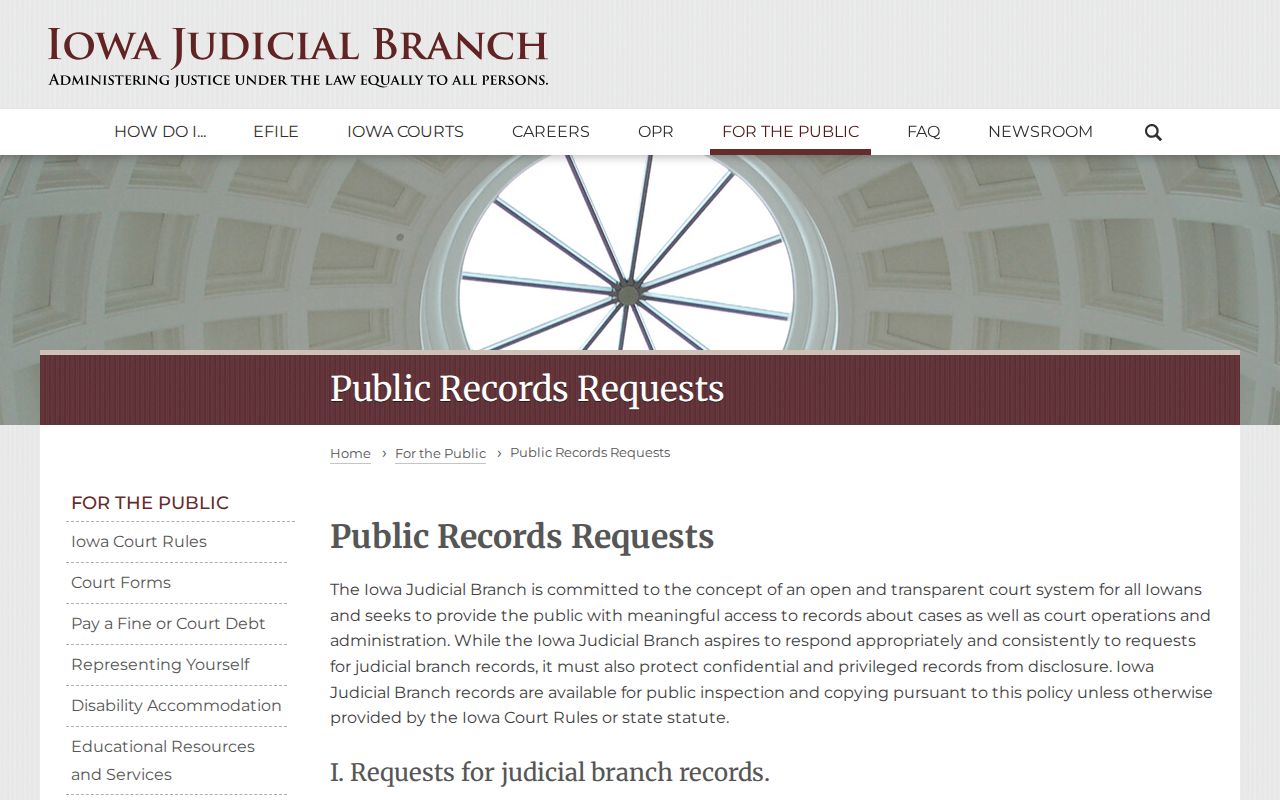
Under that policy, court documents in Mitchell County come from the clerk holding the file or from the public computer at the courthouse.
What a Warrant Search Asks For
Fill in only the fields the official interface requests. For Mitchell County, an exact case or citation number beats a name.
| Field | Use | Limit |
|---|---|---|
| Name and alias | Find possible case matches. | Spelling affects results. |
| Role | Filters a person’s case role. | A name may appear in several roles. |
| County | Focuses on Mitchell County. | It is not statewide clearance. |
| Case or citation | Targets a known file. | Does not prove active status. |
Mitchell County Clerk Follow-Up
The Mitchell County Clerk of Court sits at 212 South Fifth Street, Osage, IA 50461, and lists (641) 732-3726. Call when a result looks incomplete. Call when a document is missing. Ask also about docket terms that are unclear. Give the case number, record type, and date range. The courthouse public terminal is another official route. Judicial Branch policy says court records and filings come from the clerk where the case is on file or from that office's public computer. A request may be verbal or written. Complex requests can require a written description. Fees can cover paper, postage, retrieval, review, redaction, supervision, or programming. Mitchell County posts no exact fee schedule, so request an estimate instead of assuming a price. The county clerk source lists the office's location, phone, and hours.
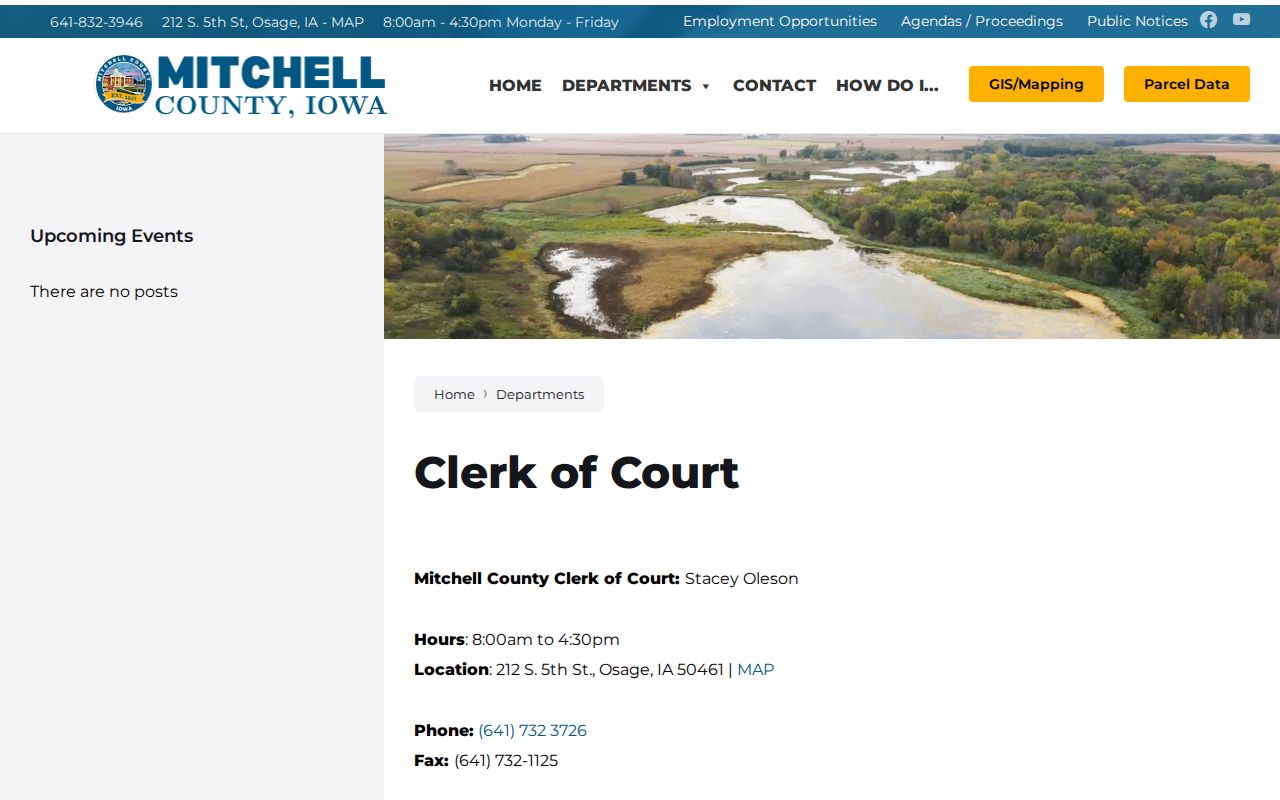
The clerk keeps Mitchell County court records, but those historic holdings are not a live index of active warrants.
Mitchell County Warrant Search Results
A result may list a case number, court, case type, party role, and docket events. It may not show current warrant status. Use the identifiers to ask the clerk and sheriff. Read docket entries in order before calling. A warrant-issued entry may be followed by a return. An appearance, a withdrawal, or another court action can come later. Guessing at a short code is a mistake. A bench warrant usually follows a missed court duty, while Iowa Code section 805.5 calls the process after a willful failure to appear an arrest warrant. To recall a warrant means the court withdraws it; to quash means the process is set aside. Neither term can be inferred from silence in a Mitchell County docket.
| Case number | The court identifier. |
|---|---|
| Court and county | The filing location. |
| Case type | The public case category. |
| Docket event | A court action needing current confirmation. |
| Access note | A restriction or missing public document. |
No Mitchell County Search Roster
Mitchell County publishes no active-warrant list, most-wanted roster, or warrant phone line. Use the sheriff source page for the public contact fallback.
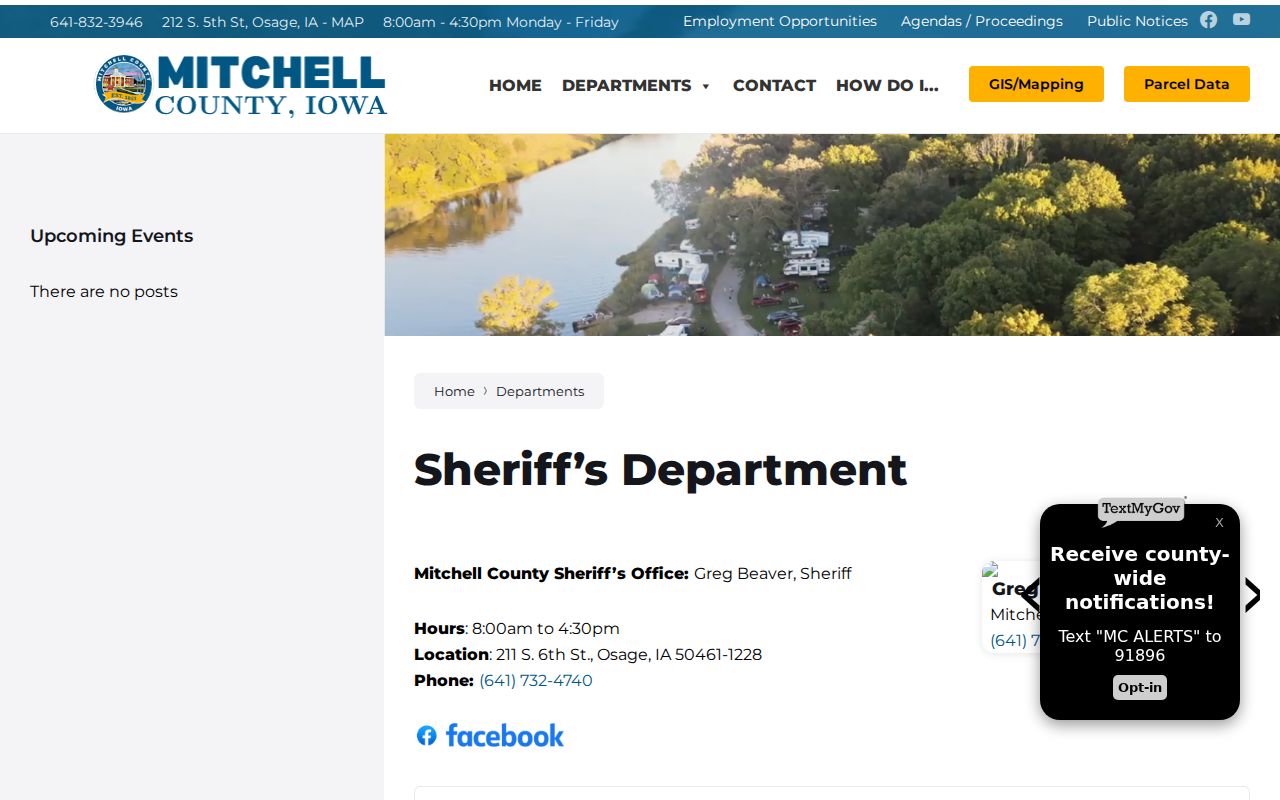
It does not provide an online name-search form.
Note: A blank result does not rule out new, unserved, sealed, juvenile, confidential, or restricted process.
Mitchell County Warrants: Who Holds What
The clerk holds the court file. The sheriff and other peace officers handle service. Iowa Courts Online provides public case data. The IOWA System stays restricted to authorized agencies. Iowa Code section 804.4 also allows service in any Iowa county, so a Mitchell County filter cannot rule out cross-county records or service. Iowa's unified trial court structure rules out a false municipal-court trail. Judicial magistrates, district associate judges, and district judges handle assigned criminal, scheduled-violation, and infraction matters within Iowa District Court. City clerks handle administration and parking. They are not a second county criminal-warrant clerk. For a Mitchell County criminal or state traffic docket, stick with Iowa Courts Online and the Mitchell County Clerk. For current service, ask the Mitchell County sheriff which agency should answer.
Mitchell County Public Terminal
Not every Mitchell County record sits on a website. The clerk can pull files that never went online, and the courthouse public terminal opens the court's own system. A complicated chapter 22 request works best when you give enough detail to identify the existing record. The office will not build a countywide list for you. The court-appearance page confirms the clerk as the route for courthouse records.
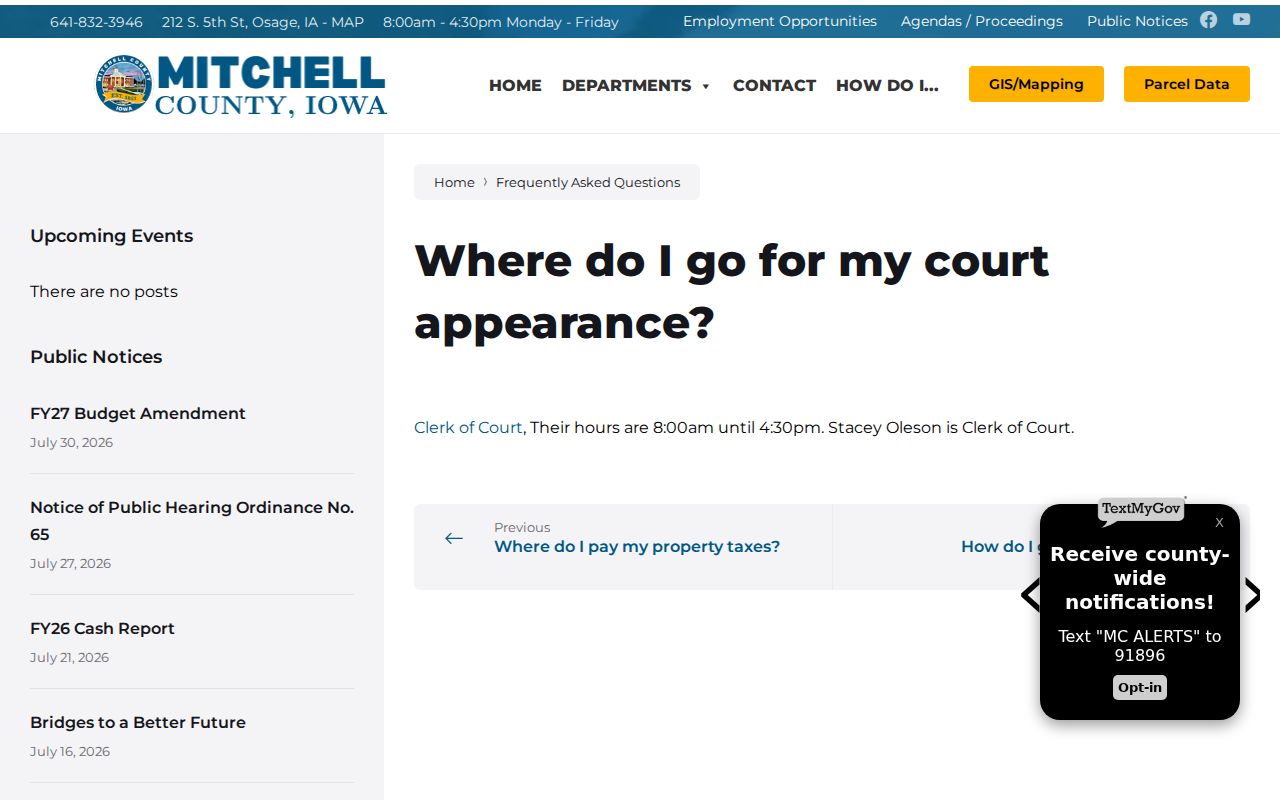
It directs court visitors to the clerk in Osage.
Which Warrants Stay Restricted
Iowa Code section 804.29 lets Mitchell County hold back warrant details until arrest or first appearance. Juvenile, sealed, and investigative records stay restricted too.
Access rule: No public Mitchell County warrant check can guarantee access to every unserved, juvenile, sealed, or confidential matter.
Mitchell County Parking Exception
Iowa Courts Online leaves city parking violations out of its results. That gap matters. Trace a parking ticket to the issuing city clerk, while district court traffic cases run through the Mitchell County clerk. A missing parking result tells you nothing about a warrant, and paying a ticket does not automatically recall court process. The split is practical in Osage, St. Ansgar, Riceville, Stacyville, and Mitchell. City hall may hold the parking ticket and the payment record, but public information for state criminal, scheduled-violation, and traffic cases sits on the district court side. Riceville adds one wrinkle. Its official page describes contract law enforcement through the Howard County Sheriff and also names the Mitchell County communications center, so a resident there should pin down the issuing court and ask which agency carries service responsibility rather than assume one county office holds everything. None of the five cities runs its own active-warrant portal. Their police and city pages are still good contact sources, though they do not replace a Mitchell County court search or current sheriff confirmation of an outstanding warrant.
Mitchell County Search Safety
The June 9, 2026 court scam alert describes callers demanding money over warrants and fines. Hang up. Never pay a stranger by gift card, cryptocurrency, wire, or a link they send. No local surrender schedule, recall form, or fixed bond amount exists here. A real Mitchell County warrant may need quick action, but speed never excuses skipping verification. Save the message without clicking its link. Pull the court and sheriff numbers from their official pages, then call those numbers yourself. Ask the clerk whether the cited case exists, and ask law enforcement what it can confirm. If the warrant may be yours, talk to a licensed Iowa attorney before appearing, posting bond, or asking the court to recall it. Iowa's statewide bond rules set no single fixed amount, and paying online does not prove the court process has ended.